Product & strategy
- Product strategy
- Roadmap shaping
- Prioritization and trade-offs
- Problem framing
- AI product direction
- Outcome definition
- Customer and stakeholder alignment
- Responsible product decisions
AI Product & Engineering Leader
I lead teams that turn applied AI and complex platforms into useful, trustworthy products, from strategy and prioritization through production.

I'm a Senior Engineering Manager and AI Product & Engineering Leader with more than 25 years across web applications, microservices, distributed systems, consumer payments, and enterprise architecture. I bring technical depth together with product judgment: framing problems, shaping roadmaps, making trade-offs, and helping teams carry good ideas into production.
Today I lead multiple Scrum teams in Consumer Payments and contribute to product strategy, prioritization, AI product direction, and cross-functional execution. My focus is Applied AI that can move beyond the demo stage into systems people can trust: agents with meaningful guardrails, retrieval grounded in data, and evaluation that tells us honestly whether a product works.
As young people use AI more in learning, creativity, and everyday life, I try to keep their perspective in view when thinking about product design and guardrails. Safety should protect trust and agency without taking away curiosity, learning, or the freedom to experiment. I completed my MBA at San Jose State in August 2026 to add formal business grounding to the engineering and leadership experience.
I approach AI products as a connected set of user needs, business choices, technical systems, and trust decisions.
01 / Start with the problem
Good product direction begins with the decision to improve, the people affected, and the outcome worth measuring, not with a capability looking for a use case.
02 / Design for trust
Grounded retrieval, constrained actions, human accountability, and clear failure paths matter especially when systems operate in regulated or high-consequence domains.
03 / Measure what matters
Evaluation should reveal whether a system is useful, reliable, and safe in the situations that matter, not simply whether a demo looks impressive.
04 / Build for the next generation
As young people use AI more, guardrails should build confidence and trust without removing the ability to explore, learn, and grow.
A few examples of how I connect product intent, technical decisions, team execution, and measurable evidence.
Agentic AI / 2026
Problem: make a complex credit-check workflow easier to use without hiding the reasoning or the constraints behind it.
Role & decisions: Built with a five-person team using multi-step agentic orchestration, behavioral tests, and a deliberately simple interface inside an existing enterprise platform.
Evidence: First place in category at a global AI code-a-thon, out of more than 315 teams.
Generative AI / 2024
Problem: reduce the effort of answering repetitive ESG questionnaires without losing traceability to source material.
Role & decisions: Built a GCP Vertex AI workflow that drafted answers from source documentation and added a validation step before review.
Evidence: Reached the semifinals of the GenAI Hackathon 2024.
Payments platform
Problem: deliver real-time movement of money through services that consumer channels can use reliably.
Role & decisions: Led work across payment services and consumer-facing integrations, balancing reliability, latency, failure handling, and channel needs.
Evidence: Delivered a shared foundation for real-time consumer payment experiences in a high-trust domain.
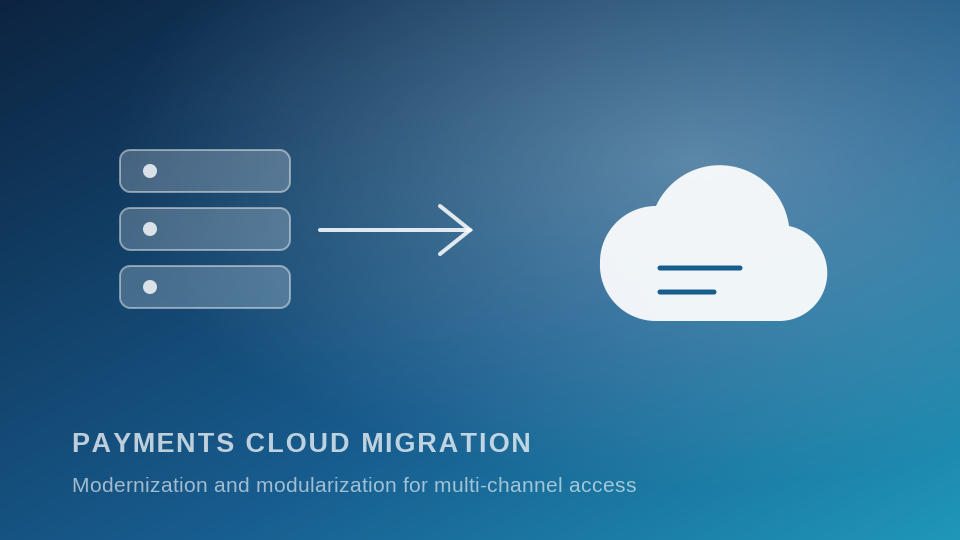
Cloud and modernization / current
Problem: modernize critical payment applications without fragmenting the channels and services that depend on them.
Role & decisions: Helped shape modularization and shared web-service/API boundaries for cloud delivery across consumer channels.
Evidence: Ongoing platform work that creates a more consistent foundation for future payment products.
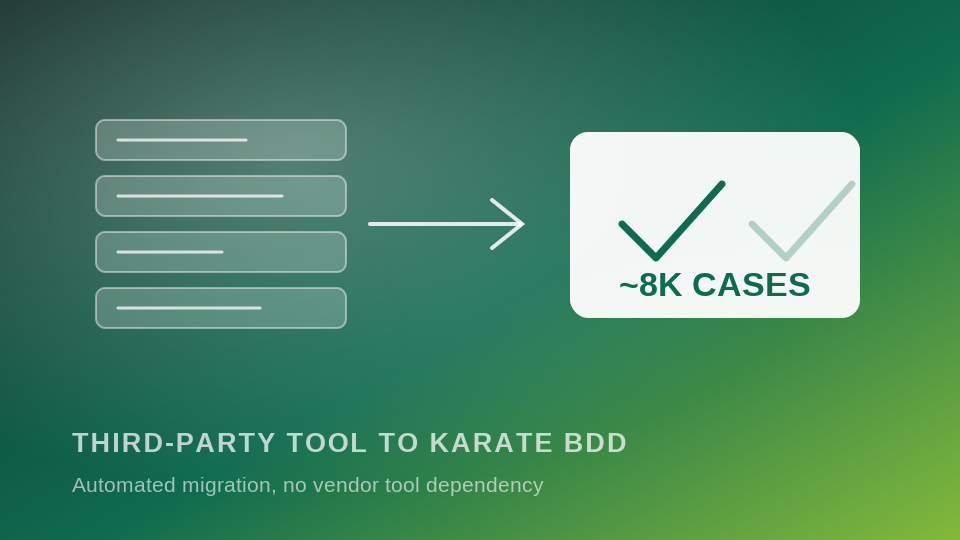
Test automation
Problem: remove a licensed testing dependency without sacrificing existing coverage or forcing a manual rewrite.
Role & decisions: Led a framework that automatically converted thousands of test cases to Karate BDD.
Evidence: Reduced tooling dependence, widened coverage, and gave teams a faster path for new tests.
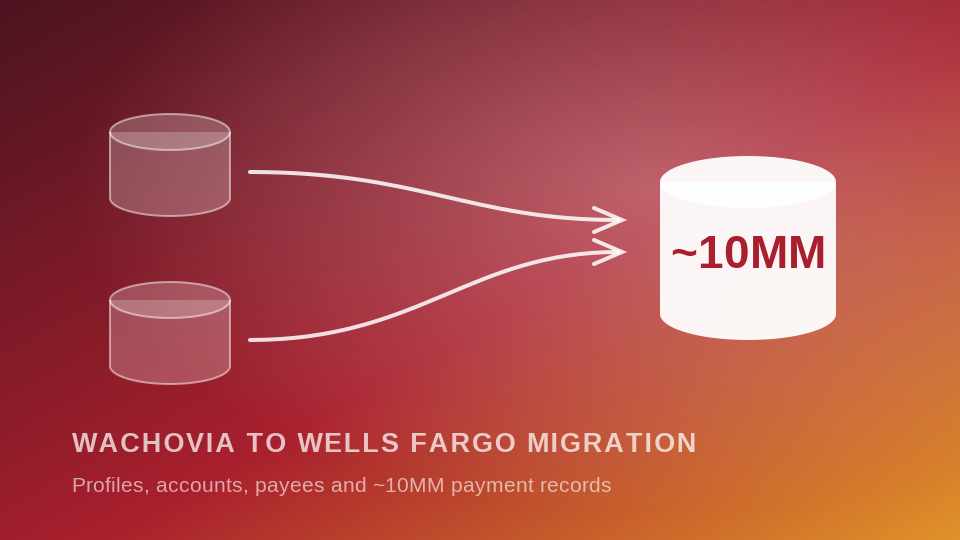
Data migration
Problem: move large-scale payment data during a major financial-services transition without disrupting dependent experiences.
Role & decisions: Led development for a coordinated migration of payment data across enterprise systems.
Evidence: Delivered a large-scale payment migration as part of a major enterprise transition.
Scope
I lead multiple Scrum teams and connect engineering execution with product strategy, roadmap choices, prioritization, architecture, risk, and cross-functional delivery.
Trust
I help move Applied AI toward production with grounded retrieval, agent guardrails, behavioral evaluation, and a clear view of what should happen when a system is uncertain.
Evidence
My work includes a large-scale payment migration, automation around thousands of test cases, and payment capabilities designed for high-trust, high-availability environments.
1st place
Our team took first place in our category, out of more than 315 teams competing worldwide over two weeks to solve real enterprise problems with AI. We built an enterprise credit-check assistant, and the judges singled out how pragmatic and scalable the architecture was.
Semifinalist
Built ESG survey automation on a cloud AI platform, turning a manual questionnaire process into a workflow that drafted answers from source documents and then checked them.

Led teams delivering consumer payment products and platform capabilities, growing engineers while shipping features on a steady roadmap. Also drove a testing modernization effort that automated the migration of thousands of test cases to Karate BDD.
Led the modernization and modularization of payment applications so they could support multiple channels through shared services and integrations. I also owned design and integration work for onboarding new clients, simplifying integration and support requirements.
Built J2EE web applications and led payment-data migration work associated with a major bank merger, delivering the work within a defined migration window.




An executive-format program for working professionals, finished alongside a full-time engineering leadership role and ending with a strategy capstone. My second master's degree, this one in strategy, finance and leading organizations through change.

A week on global business innovation, run in partnership with San Jose State University, mixing industry visits with role-based strategy simulations.

A three-year postgraduate computing degree covering software engineering, algorithms, databases and systems design. This is where the fundamentals came from.

Applied AI is what I work on and think about most. If you're building in the same area, I'd enjoy hearing from you.